Why Your Sales "Die" When You Move from Facebook Messenger to a Website
Transitioning from Facebook Messenger sales to a website often causes a drop in conversion. Learn why this happens and how to fix it with automated follow-ups.
So, your Facebook page is growing. You’re tired of replying to hundreds of "Price please?" messages every day. You decide it’s time to grow up and get a website.
You set up the store, you link it in your ads, and you wait for the orders to roll in automatically.
But instead of a sales boom, you see a conversion drop-off.
People click the link, they visit the site, they even reach checkout—but they don't buy. In the "F-commerce" world (Facebook commerce), you would have closed that sale in the chat. But on a website, they just vanish.
This is the "Human Gap," and it’s why many Bangladesh-based store owners quit their websites and go back to Messenger. But you don't have to.
The "Human Gap" in Ecommerce
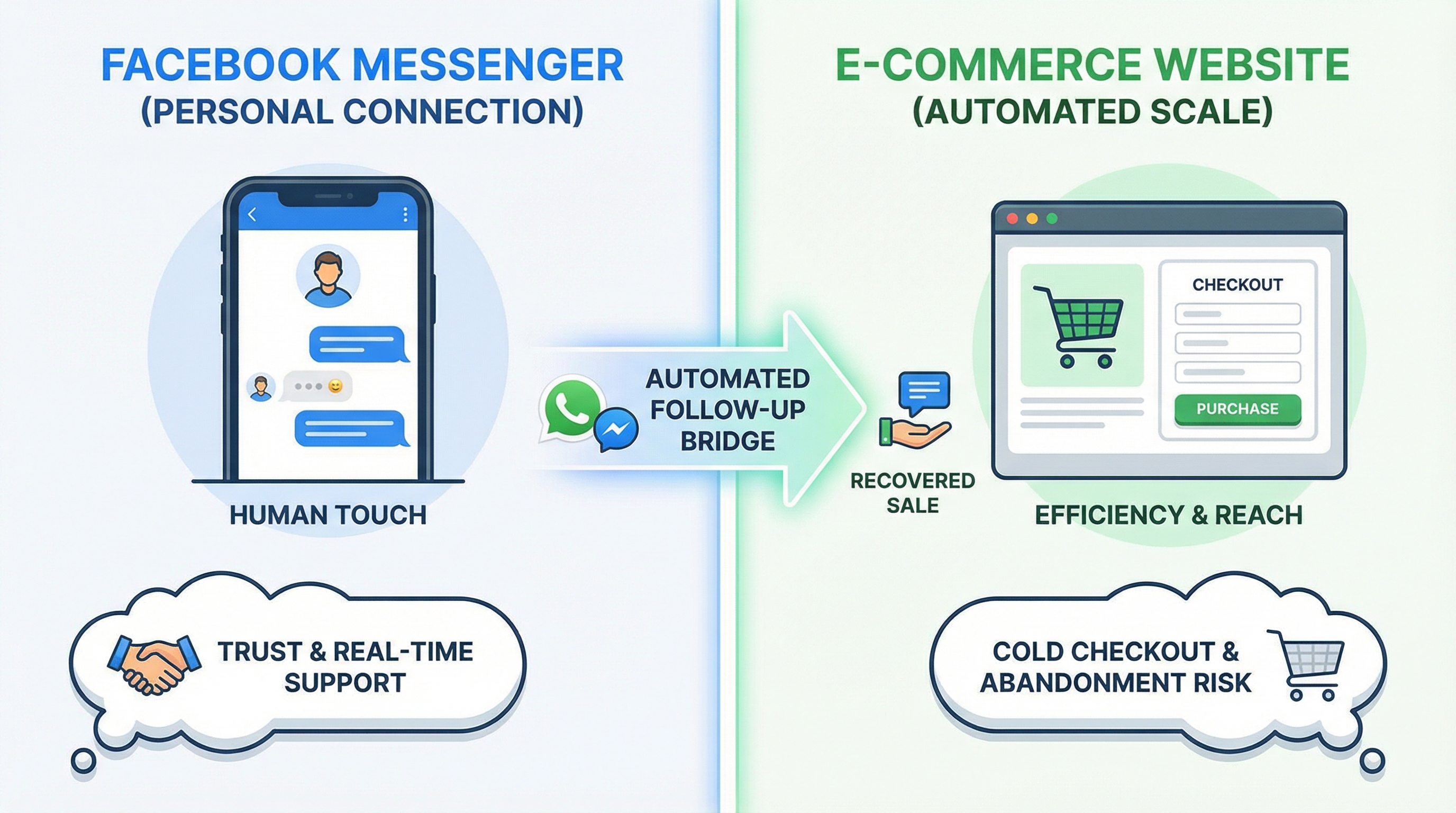
When a customer buys on Facebook Messenger, it’s a conversation. If they have a doubt about the size, they ask. If they want to see a real photo, you send it. If they forget about the order, you can ping them.
On a website, that "human" is gone.
The customer is alone with a cold checkout form. If they get a bit of "buying anxiety," there is no one there to reassure them. They fill out the form, hesitate for a second, and then close the tab.
This is where the incomplete order problem hits the hardest. On Messenger, you would have followed up. On a website, most stores just let them go.
Bridging the Gap with Automated Follow-Up
You don't need to be online 24/7 to fix this. You just need a system that mimics the follow-up you used to do on Messenger.
By using whatsapp follow up ecommerce, you bring the "chat" experience back to the automated website experience.
* Messenger Style: "Hey, are you still interested? Let me know!"
* Website Follow-Up Style: "Hi [Name], we noticed you didn't finish your order. Need help with the size or payment?"
Suddenly, the customer feels that "human" presence again. They realize there is a real team behind the website. It bridges the gap between the efficiency of a website and the trust of a chat.
How to Make the Transition Successful
- Don't hide your contact info: Keep your WhatsApp button visible on every page.
- Use "Order Recovery" as your secondary sales team: While you sleep, your automated follow-up is "chatting" with those who left the checkout.
- Use real photos: Since you can't show the product "live" in a chat, make sure your website has real, unedited photos in the gallery.
Conclusion: You Can Have Both
You don't have to choose between the scalability of a website and the high conversion of a chat. By implementing a follow-up layer, your website stops being a cold machine and starts feeling like your Facebook page—but automated.
Next step
Turn the playbook into an automated recovery flow
FollowUp captures incomplete checkouts and sends SMS or WhatsApp follow-ups while the order is still warm.