How to Stop High RTO from Killing Your Ecommerce Business
Learn how to reduce Return to Origin (RTO) in your Bangladesh ecommerce store using simple order verification and follow-up strategies.
If you’re running a Cash on Delivery (COD) business in Bangladesh, you know the "RTO Nightmare."
You get an order. You pack it with care. You pay the courier fee. And then, three days later, the parcel comes back.
"Customer not available," "Wrong address," or the worst one: "I didn't order this."
Return to Origin (RTO) isn't just a loss of a sale; it’s a loss of real cash—the packaging, the logistics, and the time. If your RTO rate is over 10-15%, you’re likely losing more money than you’re making.
Here is the truth: most RTOs happen because of lack of verification and buyer’s remorse. But there is a way to fix it using nothing but strategic follow-up.
The Secret Cause of RTO: The "Impulse" Order
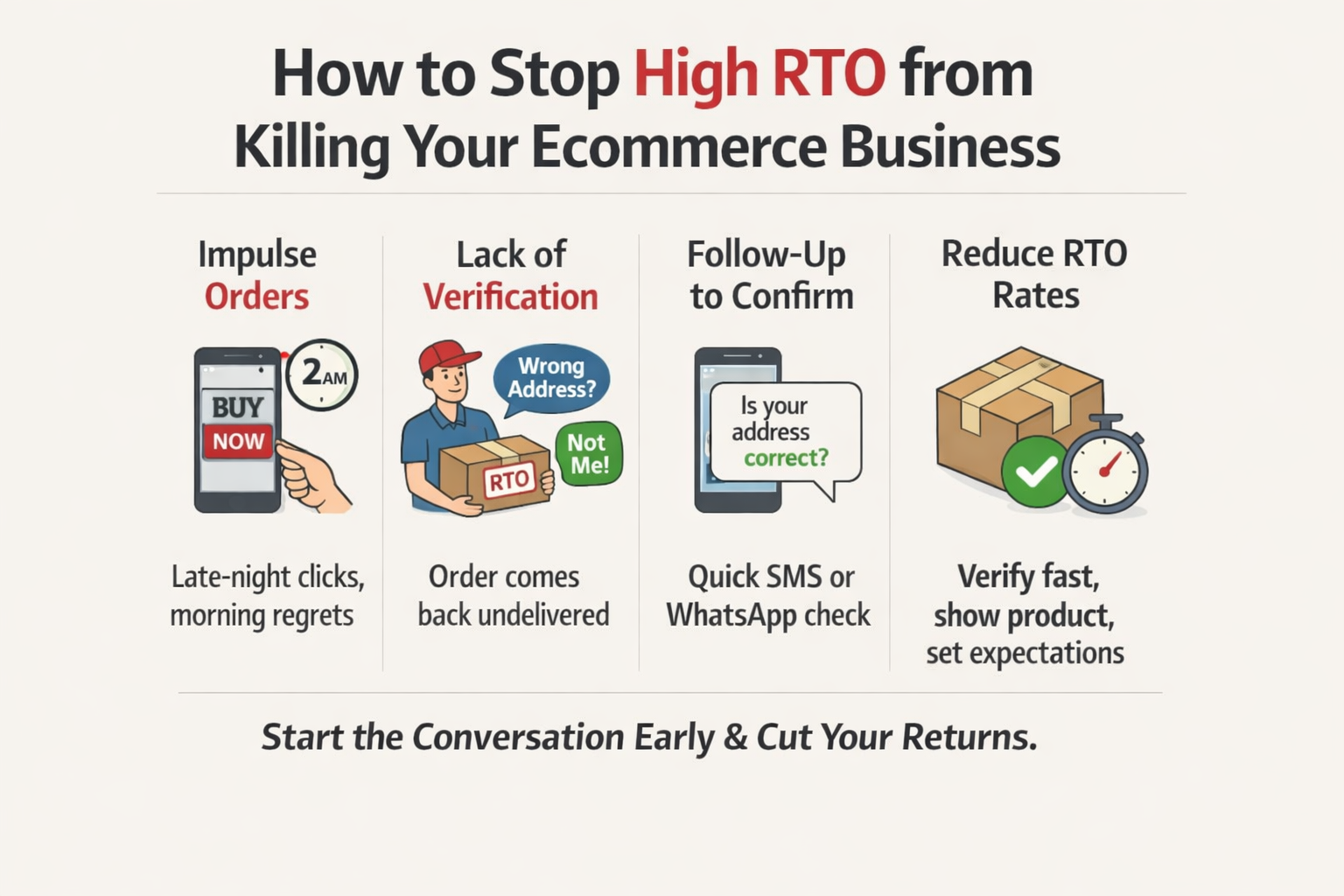
In the world of Facebook ads, people buy on emotion. They see a cool gadget at 2 AM, click "buy," and then go to sleep.
By the time the courier calls them 48 hours later, that emotion is gone. They’ve cooled down. They’re thinking about their rent or their electric bill.
If the first time they hear from you *after* ordering is when the delivery man is at their door—it’s too late. They’ve already decided to reject it.
How Follow-Up Acts as a Verification Layer
This is where ecommerce conversion issue turns into a logistics solution. By implementing a post-checkout follow up, you are essentially "locking in" the order.
When a customer gets an SMS or WhatsApp message 10 minutes after ordering:
- It confirms the details: "Hi Rakib, we received your order for Dhaka. Is this address correct?"
- It builds trust: It shows you are a real, professional shop, not a scam.
- It catches "Fake" orders: If someone gives a fake number, the delivery won't even start because the message won't deliver.
By using an order follow-up system, you can filter out the non-serious buyers *before* you pay the courier.
Practical Ways to Reduce RTO
* The 5-Minute Verification: Set up an automated message that asks for a quick confirmation. If they don't reply, don't ship.
* Show the Product Again: In your WhatsApp follow-up, send a photo of the actual product being packed. This reignites the "excitement" they felt when they first saw the ad.
* Be Clear About Delivery Times: Many RTOs happen because the customer expected it in 2 days, but it took 5. Use your follow-up to set realistic expectations.
Conclusion: RTO is a Communication Problem
RTO isn't just a "bad customer" problem; it’s a communication problem. If you ignore your customer from the moment they click "checkout" until the courier arrives, you’re inviting them to cancel.
Start the conversation early, verify the intent, and watch your returns drop.
Next step
Turn the playbook into an automated recovery flow
FollowUp captures incomplete checkouts and sends SMS or WhatsApp follow-ups while the order is still warm.