High Traffic But Low Sales? Here's Why Your Ecommerce Store Isn't Converting
Getting thousands of visitors but barely any sales? Learn why high website traffic doesn't guarantee ecommerce success and what to do when customers visit but don't buy.
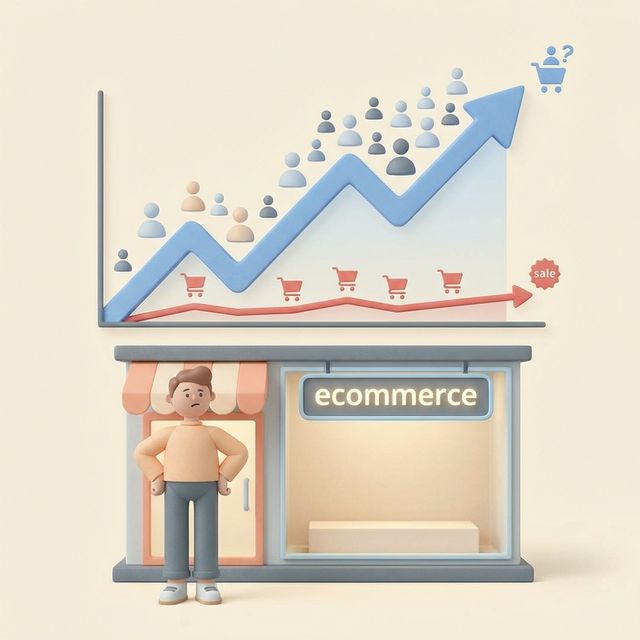
You check your analytics: 5,000 visitors this month. That's great, right?
Then you check your sales: 12 orders.
Wait... what?
If you're getting high traffic but low sales, you're experiencing one of the most frustrating problems in ecommerce. Your Facebook ads are working. People are clicking. Your website is loading. But somehow, visitors aren't becoming customers.
Let me explain why this happens and what you can actually do about it.
The Traffic Trap: Why More Visitors ≠ More Sales
Here's the uncomfortable truth most ecommerce store owners learn the hard way:
Traffic doesn't pay your bills. Sales do.
You can have 10,000 visitors a month and still go broke. Or you can have 500 visitors and build a profitable business. The difference isn't in the numbers—it's in who's visiting and what happens when they arrive.
The problem isn't your traffic volume. It's:
- Wrong audience — Your ads attract browsers, not buyers
- Unclear value proposition — Visitors don't understand why they should buy from you
- Trust deficit — Nothing on the site makes them feel safe to buy
- Decision paralysis — Too many choices, too little guidance
- Friction at checkout — The buying process is confusing or complicated
- No follow-up — Interested visitors leave and never hear from you again
Notice how none of these are about getting MORE traffic? That's the point.
Why Facebook Ads Give You Visitors, Not Customers
If you're running Facebook ads and drowning in traffic but starving for sales, here's what's probably happening:
1. You're optimizing for clicks, not conversions
Facebook gives you what you ask for. If your campaign objective is "Traffic" or "Engagement," you'll get clicks. But clicks from people who scroll through Facebook all day aren't the same as clicks from people ready to buy.
2. Your targeting is too broad
"Women aged 18-45 interested in fashion" might give you reach. But it won't give you customers. The person who buys ৳2,000 jewelry and the person who window-shops are both "interested in fashion," but they behave completely differently.
3. Your ad attracts curiosity, not intent
An ad that says "😱 UNBELIEVABLE PRICE" gets clicks. But it gets clicks from people hunting for the catch, not people ready to buy. They visit, realize it's a normal product at a normal price, and leave.
The result? High traffic, low sales, wasted ad spend.
The Real Conversion Killers (And They're Not What You Think)
Most store owners assume low sales mean:
- Prices are too high
- Website is too slow
- Products aren't good enough
Sometimes, yes. But usually? No.
Here are the REAL conversion killers:
1. No social proof
If I visit your site and see zero reviews, zero photos from real customers, zero "X people bought this today" indicators—why would I be the first to risk my money?
2. Confusing navigation
If I can't find what I'm looking for in 10 seconds, I'm gone. Your site might have 100 products, but if they're not organized clearly, I'll never see them.
3. Generic product descriptions
"High quality cotton t-shirt" doesn't sell. "Soft, breathable cotton that doesn't shrink after 20 washes—perfect for Dhaka's heat" does.
4. Zero urgency
If there's no reason to buy NOW, I'll buy LATER. (Translation: never.)
5. No recovery mechanism
I visit. I like the product. My phone rings. I close the tab. You never reach out. I forget. Sale lost.
What "Interested Visitors" Actually Do (The Data You're Missing)
Let's talk about what happens AFTER someone visits your store:
- 60-70% leave within 10 seconds (wrong audience or unclear value)
- 20-25% browse but don't add to cart (interested but not convinced)
- 10-15% add to cart but don't checkout (price shock or distraction)
- 3-5% reach checkout but don't complete (payment friction or cold feet)
That means out of 100 visitors, only 2-3 actually buy.
But here's what you're missing: The 10-15 people who added to cart and the 3-5 who filled checkout details are WARM LEADS. They showed intent. They took action. But you're treating them the same as the 70 who bounced immediately.
That's the gap.
How Follow-Up Turns Traffic Into Sales
Imagine this scenario:
Someone visits your store. Adds a product to cart. Gets to checkout. Fills in their name and phone number. Then their kid starts crying. They close the tab.
What happens next in most stores: Nothing.
What SHOULD happen:
Within 5 minutes, they get an SMS: "Hi [Name], noticed you were checking out [Product]. Need help? We're here!"
That simple message does three things:
- Reminds them they were interested
- Offers help if they're stuck
- Brings them back while interest is hot
Result? 20-30% of these "lost" visitors complete their orders.
This isn't aggressive marketing. It's customer service. You're helping someone who ALREADY showed interest.
FollowUp: Turning Visitors Into Customers Automatically
Most ecommerce platforms track visitors and orders, but they don't track the in-between—the people who showed interest but didn't complete the purchase.
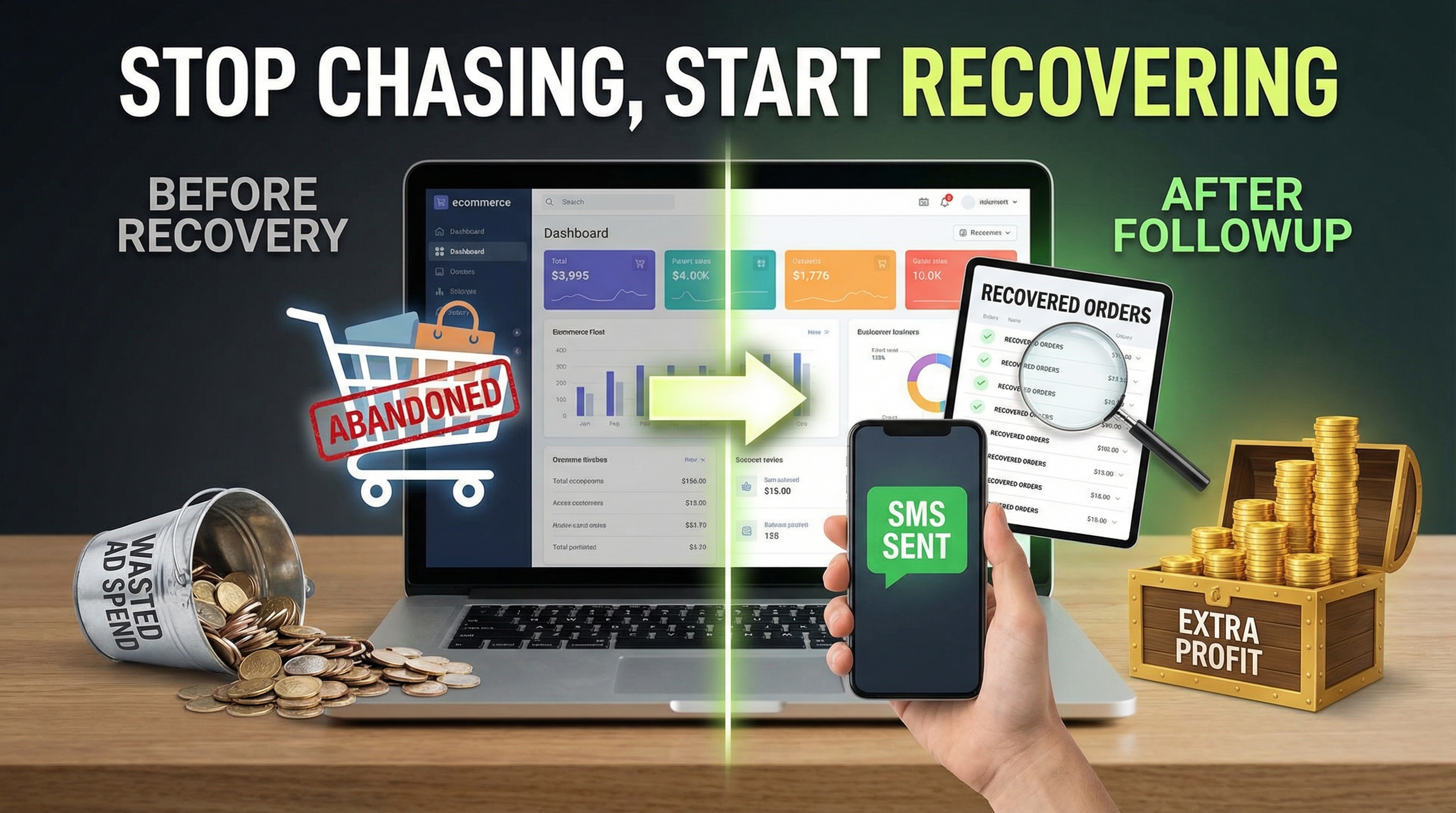
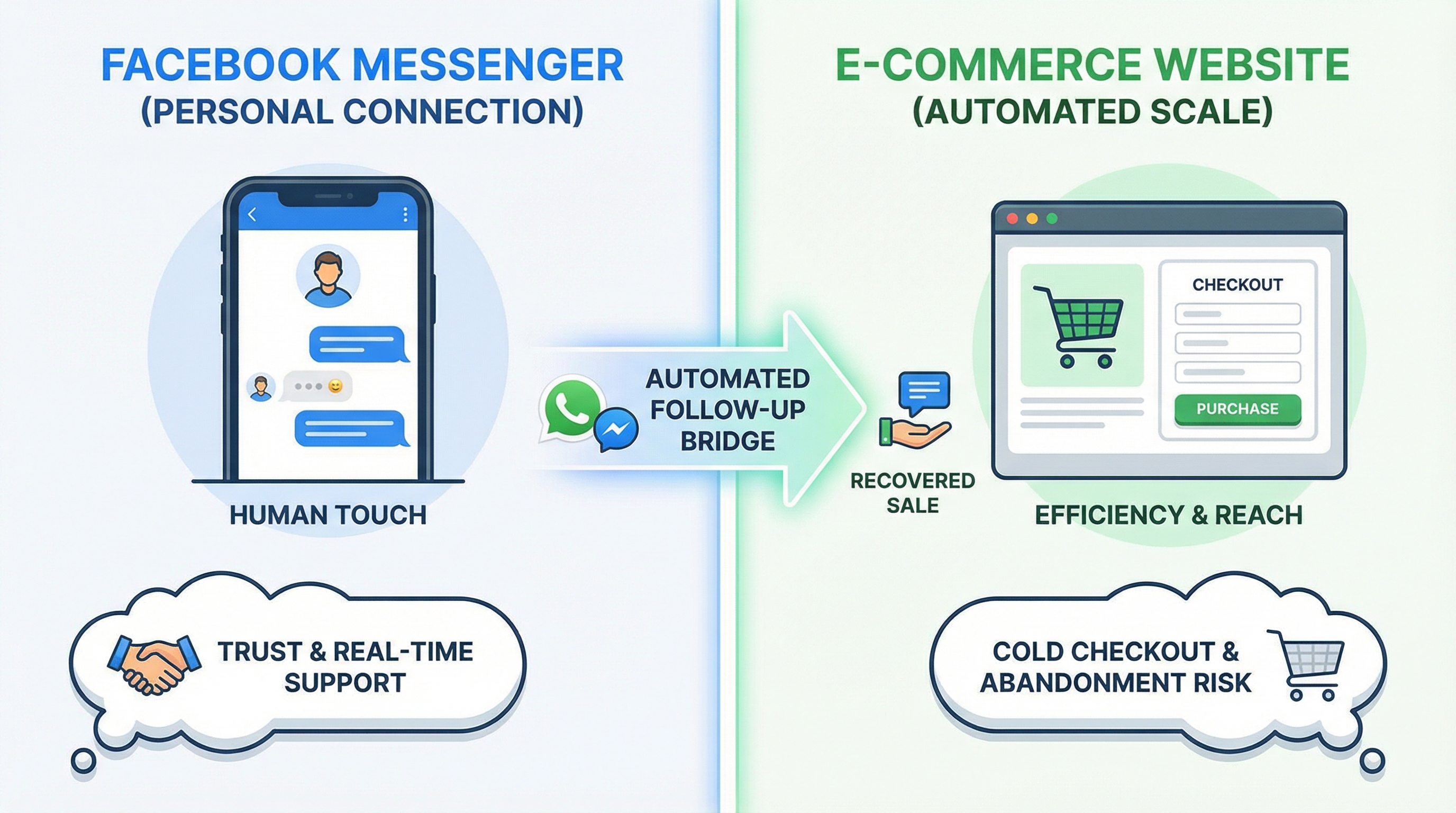
FollowUp captures those incomplete orders and sends automatic SMS or WhatsApp follow-ups when someone fills checkout details but doesn't place an order.
No manual work. No spreadsheets. Just automatic recovery of sales you'd otherwise lose.
What To Do Right Now If You Have High Traffic, Low Sales
1. Check where visitors are dropping off
Use Google Analytics or your platform's analytics to see:
- Which pages have high bounce rates?
- Where do people exit the checkout process?
2. Segment your traffic sources
Not all traffic is equal. Check:
- Which Facebook ad campaigns bring buyers vs browsers?
- Organic vs paid traffic conversion rates?
3. Add trust signals everywhere
- Customer reviews
- Real photos from buyers
- Money-back guarantee
- Secure payment badges
4. Simplify your checkout
Every extra field is a conversion killer. Ask for the minimum:
- Name
- Phone
- Address (for delivery)
5. Set up order recovery
Install a system that captures incomplete orders and follows up automatically within 5-10 minutes.
6. Test urgency elements
- Limited stock indicators
- Time-limited discounts
- "X people viewing this now"
The Uncomfortable Truth About Ecommerce Traffic
Here it is: Getting traffic is easy. Converting traffic is hard.
Anyone can spend ৳10,000 on Facebook ads and get 1,000 clicks. But getting even 20 of those clicks to convert into sales requires:
- Right targeting
- Clear value proposition
- Smooth user experience
- Trust building
- Follow-up systems
If your ecommerce conversion rate is below 2%, you don't have a traffic problem. You have a conversion problem.
And the good news? Conversion problems are fixable. Traffic problems just cost more money.
Start Here
Before spending another taka on driving more traffic:
- Check your conversion rate (orders ÷ visitors × 100)
- If it's below 2%, stop buying traffic
- Fix your conversion leaks first
- Then scale traffic
Remember: 1,000 visitors at 3% conversion = 30 sales
5,000 visitors at 1% conversion = 50 sales
But 1,000 visitors at 3% costs a lot less than 5,000 visitors.
Want to recover the invisible sales you're losing every day?
Check out FollowUp — Automatic SMS/WhatsApp follow-up for incomplete orders.
Next step
Turn the playbook into an automated recovery flow
FollowUp captures incomplete checkouts and sends SMS or WhatsApp follow-ups while the order is still warm.